
IFSW Europe has been a partner in the three-year Responsive research project that comes to an end this month. The project has gathered a huge amount of data, working in partnership with people with lived experience, practitioners, leaders as well as academics, and undertaken analysis and field innovations. The project has explored how truly responsive social services are to citizens views, and how well social services promote democratic inclusion. The project examined the situation in six EU countries in depth and gathered views and experiences (including through as IFSW-led survey) from many more.
The final in-person events happened in January and early February 2026: a three-day conference in the University of Lisbon, a presentation in the European Parliament, Brussels and a one-day stakeholder event, also in Brussels.
IFSW Europe was well represented in these events by the IFSW President and other members of the Executive, Honorary Secretary, our Parliamentarian and by members of the New Social Workers Network.
In Lisbon, IFSW representatives led a workshop on the implications of the research specifically for social workers. We took this forward through presentations to politicians and policy makers in the European Parliament and in a wider stakeholder event in Brussels the next day.
IFSW and project partners will be holding a webinar about Responsive, aimed at social workers and other practitioners – and launching our initial social workers guide – on 11th March at 17:00 CET / 16:00 UK/Dublin time. To book early, please email and we will be sending a further joining information out widely in coming days.
Key takeaway messages from Responsive are:
- Responsiveness is an important and novel policy and practice concept that complements related approaches (such as participation and co-production) by clarifying the responsibility on social services to change – to listen, act on feedback, adapt and be agile, be inclusive and promote citizens democratic rights.
- Social services across Europe still has far to go to be truly responsive and good practice examples in every country involved sit amongst many instances of tokenism, inconsistency and underdeveloped inclusivity.
- The most marginalised citizens are often most excluded by lack of responsiveness and adaptation in services.
- Social services and practitioners can change and become more responsive – and it can enhance practitioners working lives rather than adding more to their workload.
- Responsiveness requires a conducive and enabling environment: cultures, structures, processes and leadership in social services that are designed for responsiveness and inclusion.
- It requires great training, support, inclusion and care for the workforce as well as for people seeking or using services.
- It has great potential to bring social services much more into the sphere of democratic empowerment, reaching people who may be mistrustful or disillusioned with services, and acting as a counter to populism that feeds rather than resolving fears and negativity in our societies.
You can read all about Responsive on the website here (and come back to the website as much more will be uploaded over coming weeks).
In the meantime, here are a few pictures from the Responsive events, which included many people with lived experience, new and more experienced social workers, researchers and educators, and policy makers.
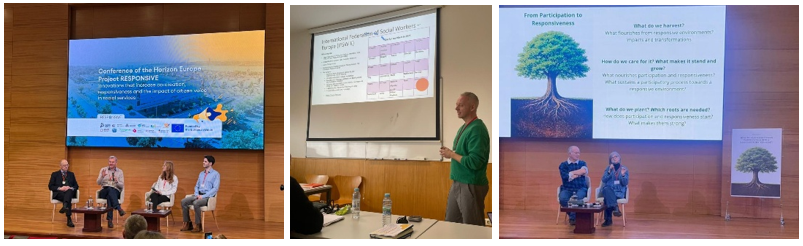
Lisbon conference
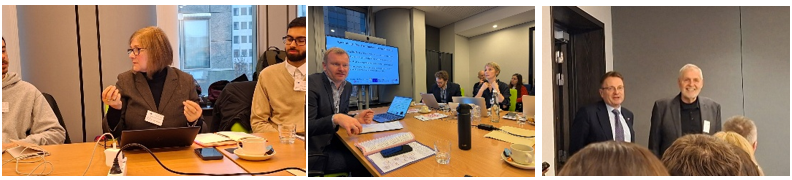

At the European Parliament
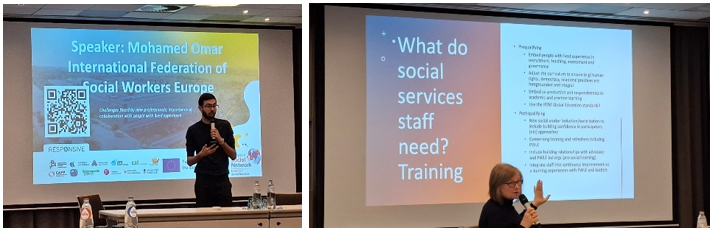
Presenting to stakeholders