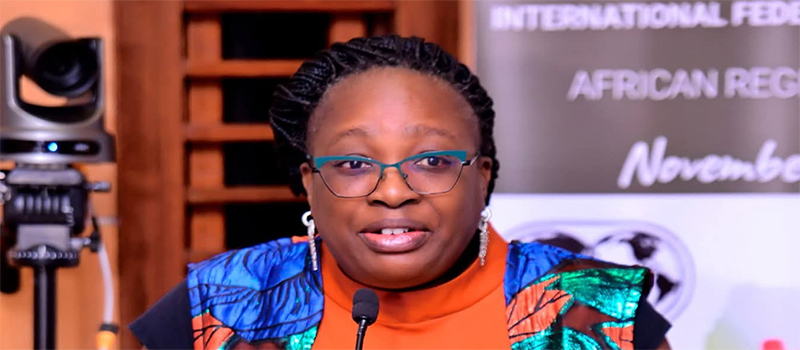
The International Federation of Social Workers (IFSW) Africa Region concluded its 2025 Regional Conference in Dakar with a renewed call for stronger social service systems, enhanced protection for vulnerable groups, and deeper regional collaboration to advance social cohesion and sustainable development across the continent.
Held at the Ecole Nationale de Développement Sanitaire et Social (ENDSS) from 26–30 November, the conference attracted over 200 participants from Benin, Burkina Faso, Burundi, Cameroon, Canada, Côte d’Ivoire, Democratic Republic of Congo, Gambia, Ghana, Guinea-Bissau, Kenya, Liberia, Mali, Morocco, Niger, Nigeria, Senegal, South Africa, Togo, United Kingdom, United States of America, Zambia, and Zimbabwe.
The conference opened with welcome remarks by Abib Ndiaye, IFSW Africa Vice President and President of FTSS Senegal.
“The future of Africa depends on the strength of our social fabric,” he said. “Social workers must remain at the centre of interventions that promote dignity, justice, and human development.”
IFSW Global President Joachim Mumba also delivered opening remarks, praising Africa for its leadership: “Africa continues to demonstrate to the world that transformative social work emerges from lived experience, resilience, and community. The commitments made here are a model for global practice.”
Oluwatoni Adeleke, IFSW Africa President, delivered the President’s Opening Address and later presented the official communiqué.
“This conference has reaffirmed our collective resolve to protect the vulnerable, strengthen the social service workforce, and build peaceful, resilient communities. Our commitments will guide Africa’s voice at the 2026 IFSW Global Conference in Kenya.”
The theme of the conference “Social Work Facing the Challenges of Social Cohesion and Sustainable Development in Africa: Current Trends and Perspectives” was delivered by Dr. Samba Corr Sarr, Chief of Staff to the Minister of Health and Social Action, representing the Minister. The official opening was performed by the representative of the Minister of Family, Social Action and Solidarity.
Speaking on behalf of development partners, Mr. Jacques Boyer, UNICEF Representative in Senegal, noted: “Social workers are frontline peacebuilders. Their work is vital in protecting children, supporting families, and strengthening the resilience of our communities. UNICEF is committed to supporting this essential workforce.”
A key session was led by Hugh Salmon from the Global Social Service Workforce Alliance, who emphasized the urgent need for investment in Africa’s workforce: “A strong, well-supported social service workforce is the backbone of any functioning protection system. Without it, there can be no sustainable social development.”
Delegates endorsed a set of strong regional commitments, including:
1. Strengthening Workforce Capacity
- More training in case management and emergency response.
- Establishing supervision systems for professional and auxiliary workers.
- Creating PhD fellowships and mentorship programmes for young social workers.
- Expanding innovation and entrepreneurship fellowships in social work.
2. Advancing Research and Regional Knowledge
- Increased cross-country research and data sharing.
- Development of investment cases for government support.
- Documentation and dissemination of best practices.
3. Professionalisation and Standardisation
- Stronger advocacy for legislative recognition of social work across Africa.
- Promotion of a uniform continental curriculum.
- Standard definitions and ethics-based practice norms.
4. Promoting Inclusion of Young People
Special attention was given to the role of adolescents in shaping policy responses.
Delegates committed to ensuring adolescents’ voices are heard and integrated in social work programming and policy advocacy.
5. Supporting Social Work Students
Anstance Fometu, Electoral Officer for IFSW Africa, emphasised the need to remove financial barriers:
“Social work students are the future of our profession. They must not be excluded from conferences because of cost. We commit to allocating free slots to enable their full participation.”
6. Strengthening Advocacy and Leadership
- Encouraging social workers to assume leadership roles in government and civil society.
- Increased engagement with traditional and faith leaders to address social norms that perpetuate violence.
7. Protecting Frontline Workers
- Prioritising safety, wellbeing, and mental health for social workers, especially those in conflict and emergency settings.
8. Preventing Technology-Facilitated Violence
The conference aligned with the 2025 16 Days of Activism theme:
“UNiTE to End Digital Violence Against All Women and Girls.”
The Dakar conference reinforced Africa’s leadership in global social work and laid the foundation for the continent’s unified input into the 2026 IFSW Global Conference in Kenya.
President Oluwatoni Adeleke concluded: “Our work does not end here. This communiqué is a call to action and Africa is ready.”