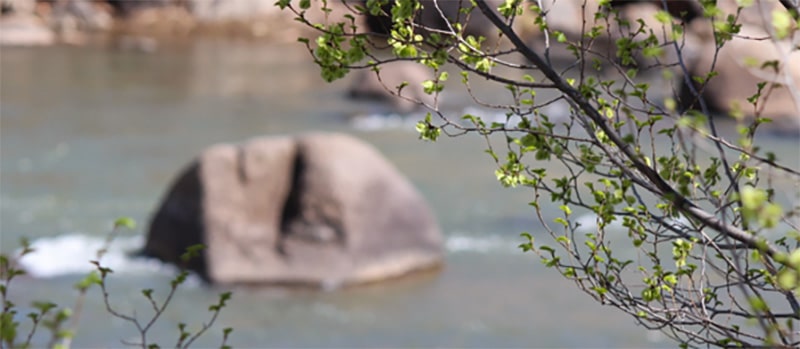
Photo credit Sarah A. Wilcox
On World Environment Day, the IFSW Indigenous Commission stands united to honor, protect, and advocate for the sacred relationship between Indigenous Peoples and the Earth. Across the globe, Indigenous Peoples have never merely survived on the land; they have coexisted with it, acting as its premier guardians and treating the soil, mountains, and waterways as living relatives.
This connection is deeply tied to the core mission of social work. Social workers understand that environmental justice is inseparable from social, economic, and human rights. When ecosystems are disrupted, destroyed, or stolen, it is the most vulnerable communities who face the immediate consequences: climate displacement, poverty, severe health crises, and social conflict.
To stand up for human wellbeing means standing up for the defenders of the Earth. Indigenous protectors consistently put their lives on the line against aggressive corporate interests—ranging from exploitative agriculture and toxic mining to the modern, ironic threat of the “green transition” which seeks rare earth minerals at the expense of our territories. Many of these protectors face state-sanctioned violence, criminalization, and death for defending what sustains us all.
As global social work professionals, we echo the foundational wisdom of the Seventh Generation Principle of the Haudenosaunee, which dictates that our current deliberations and policies must protect the wellbeing of those seven generations into the future. This universal truth of intergenerational stewardship guides the stark reflections, lived realities, and urgent warnings shared by our global regions.
Regional Perspectives and Contributions
1. Latin America and the Caribbean (LAC)
Within the Latin American and Caribbean region, sacred sites are found in the mountains and snow-capped peaks, which are places of pilgrimage and offering. The Andes mountain range, in the south of the American continent, preserves a large proportion of the pure water that exists on our planet. In addition to the social and spiritual functions that glaciers have had for millennia, they also perform essential hydrological functions in ecosystems, from which they generate the appropriate climates for the existence of all living beings.
In Argentina, a glacier law was enacted in 2010. Through a specific institute, 16,968 ice bodies have been identified to date, covering a surface area of more than 8,000 km² along the Andes mountain range. More than 7 million people depend on the river basins fed by these glaciers. During the current year, the national government has decided to amend the Glacier Law and revoke its legal protections, but international organisations such as the United Nations and the Vatican have spoken out against amending the law, urging the preservation of frozen freshwater sources for future generations.
As part of the International Federation of Social Workers, we call for awareness of the impact of this policy on thousands of families and communities. Ecosystem imbalances lead to climate displacement, drought, and contamination, with the consequences for social conflict and people’s health. We further draw attention to the fact that the approval of a law which clearly benefits transnational companies, at the expense of the personal and food security of the country’s inhabitants, constitutes a serious affront to the democratic order throughout the region.
2. North America
North America is a region of the world with vast and lush landscapes, water ways, animal relatives, and is a place where millions of Native people thrived, not just survived. We lived in a world where plants were our teachers. Today, we reflect on a long history of how biodiversity continues to sustain our Tribes and Tribal communities as we carry forward Native practices of seed keeping, planting, harvesting, and treating our land and water as sacred.
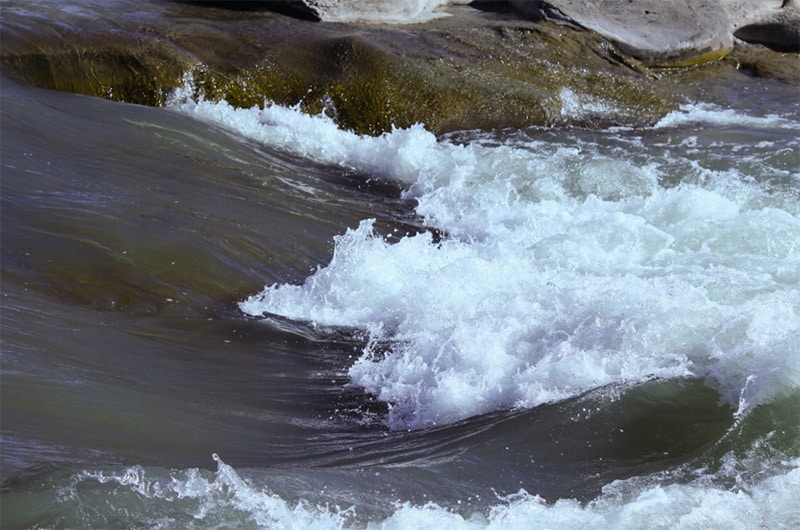
San Juan River, New Mexico, Photo credit Sarah A. Wilcox
We also reflect on a history of extractive practices that has left uranium and other mines unattended and unclean for decades. We continue to suffer from diseases such as cancer from contamination of our air, seeds, water, and lands for generations to come. Our reflection must include questions and actions of what we are doing today to encourage health through clean water and clean foods. We must investigate and interrogate how extraction has not been addressed and identify steps forward.
Today, Native youth rise up and continue the fight for our sacred environment as did Native Elders many decades earlier. We seek to restore the balance, where we once lived with the natural world. In 2016, Native youth from Standing Rock Sioux and Cheyenne River Sioux Tribes stood against an underground pipeline that would carry crude oil underground near and through Tribal sacred lands and the Missouri river. They were joined by allies from around the world who recognized the importance of protecting the water. Decades from now, will we ask and write the same story?
On this World Environment Day, we as social work professionals value the dignity of people and recognize that what worked historically to care for the natural world can work again if Native voices and practices are valued and implemented. We can and must do better.
3. Europe (Sámi Territory)
In the traditional Sámi worldview, we care for Mother Earth and the ecological system, that is part of our everyday life. We as humans are part of our land, and we depend on the land. Caring for the wellbeing of Mother Earth and the ecological system, is also caring for the Sámi People’s own wellbeing. We don’t overuse the gifts from Mother Earth, and the land is seen as a loan from future generations. For example, reindeer herders move the reindeer within their pasture area, to find food and not to overuse one place.
However, challenges have increased due to demands from mining companies and “green energy” companies, who want to utilize and explore traditional Sámi land, and tourists who overuse land with walking tracks, leaving garbage in the mountains, and coming too close to the reindeer during the calving period. These examples have consequences such as less access to traditional Sámi land for reindeer herders as well as non-reindeer herders. Chemicals have poisoned land and water after mining companies have left or become bankrupt due to limited mineral deposits. Additionally, reindeer avoid windmills, which has led to decreased reindeer pasture areas.
Sámi People´s voices spoken by themselves regarding traditional Sámi land must be permanently represented in decision-making bodies in each country in Sábmie, the Sámi land. This is not to say that there will be no societal development. It’s about the necessity for involvement of the Sámi People with their own voices and not represented by others, in decision-making regarding caring for Mother Earth, the ecological system included, on equal terms as other representatives.
Social work institutions and non-Sámi social workers must support this right to speak on behalf of ourselves and to maintain and continue our worldview, with culture and language, in our everyday life. This is in accordance with rights that the Sámi People and each Sámi individual have as Indigenous People.
4. Africa
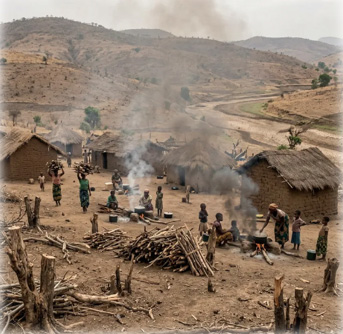
The African region faces many environmental challenges, including deforestation, land degradation, and water scarcity. A large proportion of the population depends on firewood and charcoal for daily energy needs, leading to excessive tree cutting without adequate reforestation. Studies show that nearly 46% of the continent is affected by serious land degradation. This poses severe threats to food security, rural livelihoods, and ecosystems. The Sahel region is among the most affected due to years of severe drought, overgrazing, and the clearing of woodlands for small-scale farming, all of which have contributed to declining crop yields.
Another major environmental problem is water scarcity, with roughly one in three Africans experiencing limited access to water. For example, the Lake Chad Basin has shrunk by up to 90% over the past 60 years because of climate change and over-extraction of water resources. The Horn of Africa, particularly Somalia and Chad, is heavily affected, leaving millions of people dependent on emergency aid. In Chad alone, nearly 44% of the population lacks access to safe drinking water, forcing many women and children to walk long distances daily to reach the nearest water sources.
Many of these environmental issues are driven by rapid population growth and climate change, but they are further worsened by systemic poverty, weak policy enforcement, and heavy reliance on natural resource extraction for economic survival. Protecting the environment in African countries therefore requires balancing economic growth with climate resilience. Promoting sustainable farming methods can help restore degraded soils and protect water sources.
Adopting renewable energy sources is also important but so-called “green” solutions often come with their own problems, including exploitation of Indigenous territories. The United Nations Declaration on the Rights of Indigenous Peoples emphasizes the importance of Free Prior and Informed Consent (FPIC) in all matters that affect Indigenous Peoples and their territories. Indigenous Peoples must be involved in identifying and implementing sustainable solutions that heal and care for the natural world. Likewise, involving Indigenous communities and rural populations directly in forest and wildlife conservation efforts is essential for achieving long-term environmental sustainability in Africa.
5. New Zealand and the Pacific
The Pacific region holds a profound, ancestral understanding of the permanence of the environment relative to the fleeting span of human life. We are mindful that humanity is entirely dependent on the land, not the other way around. If we destroy our environment, we destroy ourselves. The Pacific region stands firm in the belief that protecting the ocean and islands is a non-negotiable spiritual and social duty.
As social workers in Aotearoa New Zealand, our commitment to environmental justice must be deeply anchored in the foundational obligations of Te Tiriti o Waitangi. We must recognise that the degradation of our ecosystems is fundamentally linked to the historical and ongoing impacts of colonisation, which severed Tangata Whenua from ancestral lands (whenua) and waters (wai). For social workers, environmental practice requires an active alignment with kaitiakitanga (guardianship), ensuring we stand alongside iwi and hapū to protect the ecosystems that directly sustain community well-being.
In tackling the realities of climate change, we must critically challenge systemic injustices, including the “green-washed” transitions that threaten Indigenous sovereignty or marginalize vulnerable communities. The climate crisis in the Pacific manifests as severe weather events and rising sea levels, disproportionately impacting whānau, hapū, and our regional neighbours. As a profession, we cannot separate social and economic inequality from environmental harm; we must advocate for policies that prioritise ecological restoration, community resilience, and food and water security over corporate and extractive interests.
Ultimately, our practice must reflect the profound spiritual and physical reality that human survival is entirely dependent on the health of the natural world. By weaving mātauranga Māori (Māori ecological wisdom) into our frameworks, we respect the ancestral understanding that the environment is a living relative. We must uphold the timeless warning of our whakataukī: “Whatungarongaro te tangata, toitū te whenua”. If we are to achieve true social justice, we must fiercely protect the permanent land that sustains us, ensuring it remains healthy and vibrant for the generations to come.
A Call to Action for Global Social Work
On this World Environment Day, the IFSW Indigenous Commission calls upon the global social work community to:
- Amplify the voices of Indigenous land and water protectors who face corporate violence and systemic neglect.
- Oppose extractive policies—including “green-washed” transitions—that sacrifice Indigenous sovereignty, land health, and human rights for corporate profit.
- Integrate Indigenous ecological wisdom into social work practice, recognizing that environmental health is the foundation of community survival and social justice.
Let us act today so that the land which remains is healthy, vibrant, and capable of sustaining the generations to come.